
Company Profile
Environmental Policy
Corporate Philosophy
We recognize global environmental issues as one of our most important management priorities. By addressing climate change, conserving biodiversity, and promoting resource circulation, we conduct our business activities with full consideration for maintaining a healthy global environment — contributing to the collective effort of building a sustainable society.
Policy
To reduce our environmental impact across all business activities, we have established an environmental management system guided by the following principles.
- We remain fully aware of the environmental impacts associated with our activities, products, and services, promote the prevention of environmental pollution, and strive for continual improvement of our environmental management activities.
- We comply with all applicable environmental laws, regulations, and other requirements related to our activities, products, and services to which we have agreed.
- We promote the use of renewable energy, resource conservation, energy efficiency, recycling, and reuse to protect the environment.
- We strive to preserve the natural environment and quality of life of local communities.
To achieve the above policies, we set clear objectives, review them regularly, and continuously advance our environmental management system.
Scope of Environmental Management System
This environmental management system applies to the design, development, manufacturing, and maintenance services (including inspection, repair, and spare parts supply) of the following products.
- Valves (for vacuum, chemical and synthetic fiber applications, nuclear power, and electric power)
- Safety devices for overpressure protection
- Vacuum equipment and systems
- Precision machinery and components
Applicable Sites
V TEX Corporation
Tokai Plant (1263 Tarazaki, Hitachinaka-shi, Ibaraki, Japan)
Higashi-Maizuru Plant (222-4 Ogura, Maizuru-shi, Kyoto, Japan)
Applicable Personnel
All persons working under the management of V TEX Corporation at the applicable sites (all employees and on-site contractors).
A 'Good Corporate Citizen' — growing together with our local community
The Tokai Plant has been located in Hitachinaka City, Ibaraki Prefecture (formerly Katsuta City) since 1961 and has grown alongside the city itself.
Today, V TEX operates its Tokyo Headquarters, Osaka Branch, and overseas offices (South Korea: V TEX KOREA Co., Ltd.; USA: V TEX America Inc.; China: V TEX Shanghai Co., Ltd.), with a broad business presence both domestically and internationally. We believe that continuing to develop the Tokai Plant as our primary manufacturing plant will continue to energize local communities and contribute to the growth of the broader industry.
Approach to Environment
Prevention of Environmental Pollution by Chemical Substances
-
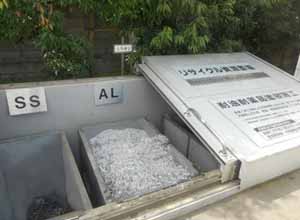
Recycling Resource Storage Area
To efficiently recover valuable metals and prevent soil contamination from chemical substances, we have established a dedicated recycling storage facility. The facility serves as a temporary storage area for metal scraps and nonconforming products generated from metal machining, sorted by shape and type until sold as recyclable materials. It is equipped with a sliding exterior cover to protect against wind and rain, and dedicated interior containers that separate and filter cutting oil, grease, and other chemical substances.
-
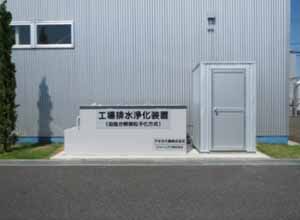
Factory Wastewater Treatment System
Water used for parts cleaning and cutting oil separated at the recycling facility are treated in the factory wastewater treatment system through oil decomposition and atomization, and are discharged only after confirming compliance with voluntary standards. Treatment agents derived from natural materials are used to minimize environmental impact, and we conduct regular water quality inspections through independent third-party organizations — ensuring strict control to prevent soil and water contamination.
-
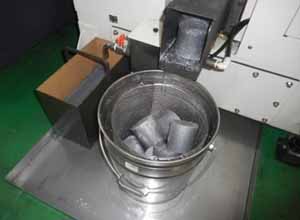
Chip Briquetting Machine
Metal chips generated during operations are compressed and solidified on-site, thereby separating residual cutting oil and moisture. This process improves workspace efficiency through space savings, reduces transportation costs to recycling facilities, and enhances overall production efficiency. It also helps prevent oil leakage and unpleasant odors at off-site recycling locations.
 Message from the President