
Handling, Maintenance & Quality
Handling
The disk is a soft, thin foil or plate; therefore, extreme care must be taken during transportation and handling. Denting the dome, creating wrinkles, or leaving fingerprints may cause premature rupture at lower-than-specified pressure.
Please refer to the instruction manual supplied with the product for further handling precautions. In particular, proper management of tightening torque is essential for reverse-acting rupture disks. Please read the instruction manual carefully before installation.
Maintenance
Rupture disk burst pressure may gradually decrease over time due to physical stresses from normal operating conditions, as well as chemical exposure from process fluids and the surrounding atmosphere. As part of routine maintenance, we recommend replacing the disk annually — even if it has not ruptured under normal operating conditions. It is also important to note that rupture disks may experience abnormal pressure or rupture unexpectedly during pressure testing of vessels or piping with the disk installed, operational errors during trial runs, or pressure instability during startup. For these reasons, we recommend keeping an adequate supply of spare disks on hand.
Quality
As rupture disks are safety devices, particularly stringent quality control is required.
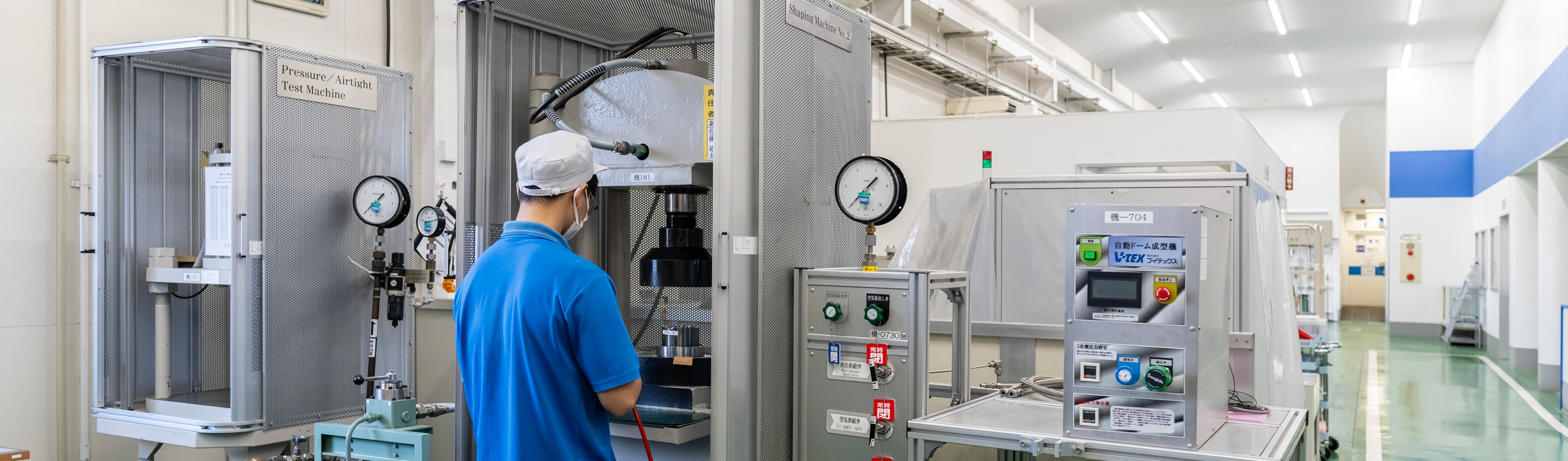
From material receipt through final shipment, all processes are strictly controlled in accordance with JIS B 8226, HPIS-101, and our internal standards. Manufacturing and inspection are performed within this framework to fully meet customer expectations. Our ISO 9001-certified quality management system supports extensive testing capabilities, covering sizes from φ10 to φ900.
Additional services including helium leak testing, cleanroom assembly and packaging, and ultrasonic cleaning are available upon request.
Related Documents
Handling
Maintenance